덤
- 내가 한번 신경써서 스크롤 길이를 줄여봤습니다 양해하세요
- 정리가 많이 성의없는 거 저도 압니다 그렇기 때문에 공개하는 진짜 처음(사실 아님) 공부할 때 쓴 성의있는 정리들
- 넘파이 기초: https://www.kaggle.com/code/dapin1490/adpy-w10-note
- 넘파이 그래프: https://www.kaggle.com/code/dapin1490/adpy-w11-note
- 판다스 기초: https://www.kaggle.com/code/dapin1490/adpy-w12-note
- 판다스 기초+: https://www.kaggle.com/code/dapin1490/adpy-w13-note
- Scipy: https://www.kaggle.com/code/dapin1490/adpy-w14-note
- 위에 있는 걸 다 모아놓은 깃허브를 찾았어: dapin1490/study-note/3 - 1 note/advanced python/WEEK LIST.md at main
- 읽어
- 더북(TheBook) 모두의 데이터 분석 with 파이썬: UNIT 15 테이블 형태의 데이터를 쉽게 다루도록 도와주는 pandas 라이브러리
- 내가 판다스 처음 쓰기 시작할 때부터 AI 쓰기 전까지 매번 보던 거 있거든요 읽어: 한 권으로 끝내는 <판다스 노트>
요약
- 함수
- 기본형(인자→출력) : 인자 받아서 출력 (
def,print) - 반환 : 인자 받고
return· 인자 받고 분기 후return(예: Pass/Fail) - 여러 개 인자/반환 : 딕셔너리 패킹, 튜플 언패킹
- 가변 인자
*args: 갯수 제한 없이 - 가변 인자
**kwargs: 이름 있는 인자 - 람다·삼항 :
lambda a, b: a + b· 삼항 연산자(한 줄 if) 예:lambda x: x+1 if x%2==1 else x - numpy
- 배열 생성 :
np.array(), 정수/float 혼합, 다차원 배열 - 빈 배열(0 채움) 생성 :
np.zeros(),np.zeros((2,5)),dtype=int·np.empty(),np.zeros_like() - 구간·등간격 배열 :
np.arange(10),np.arange(10, 20, 2)·np.linspace(0, 10, 5),endpoint=False,retstep=True - 난수 생성 :
np.random.seed(),np.random.rand(),np.random.randint(),np.random.normal(평균, 표준편차) - 난수 순서·추출 :
np.random.shuffle(),np.random.choice() - 단위행렬·대각행렬 :
np.eye(),np.diag()· dtype 확인/지정,np.info() - 인덱싱·슬라이싱 :
temp[0],temp[0,0],temp[:,0],temp[0:1,0:1] - 논리(불리언) 인덱싱 :
temp[temp>=5],&|~ - 부분 대입·nan 처리 :
temp[1,0:2]=45.1, 조건부 대입 →np.nan·np.isnan(), nan 평균으로 채우기 - 모양 변경 :
reshape(4,6),order='F',reshape(2,2,-1) - 사칙·수학 함수 : 사칙연산
+ - * / // % **,np.sqrt,np.exp,np.log/log10/log2,np.sin/cos/tan - 기본 통계 :
np.min/max(axis=0/1),argmax/argmin,np.sum(조건),mean/median/std/var/prod - 누적·차분·정렬 :
np.cumsum/cumprod,np.diff,np.sort(axis=0/None) - 사분위수 :
np.quantile,np.percentile - 이상치(IQR) : Q1, Q3, lower_bound/upper_bound, 클리핑(경계값으로 대체)
- pandas
- Series 생성·인덱스 :
pd.Series(),.index,.values, 인덱스 지정index=['a','b',...], 인덱스로 접근·수정 - DataFrame 생성·속성 :
pd.DataFrame(),.index,.columns,.values - dict→DataFrame·전치 :
pd.DataFrame(data=...),.T(전치) - 요약·정보 :
describe(include='all'),info() - 컬럼·행 접근 :
temp["equipment_type"],temp.loc["INJ-001"] - 실습 데이터 참고 : smart-practice
test.py/ equipment_data
함수
함수는,, 희생과 봉사정신으로 만드는 거다,, (내 의견 아님 강사님 의견임)
-
기본형: 인자 받아서 뭔가 하기
1
2
3
4
5
def greet(name):
    print(f"Greetings, {name}.")

greet("Dale Vandermeer")
greet("Harvey")
-
인자 받고 돌려보내기
1
2
3
4
def add(a, b):
    return a + b

print(add(345, 3458967))
-
인자 받고 뭔가 하고 돌려보내기
1
2
3
4
5
6
7
8
def get_status(score):
    if score >= 60:
        return "Pass"
    else:
        return "Fail"

print(get_status(59))
print(get_status(60))
-
여러 개 받거나 여러 개 돌려주기
1
2
3
4
5
6
7
8
9
10
11
12
13
14
def packing(id, name, age):
    return {"id": id, "name": name, "age": age}

def unpacking(person):
    return person['id'], person['name'], person['age']

dale = packing(1, "Dale Vandermeer", 42)
print(dale)
print(unpacking(dale))

'''
{'id': 1, 'name': 'Dale Vandermeer', 'age': 42}
(1, 'Dale Vandermeer', 42)
'''
-
가변 인자 1: 파라미터를 갯수 제한 없이 보낼 수 있음
1
2
3
4
5
6
# 가변 인자: 갯수 제한 없이 보낼 수 있음
def total(*args):
    return sum(args)

print(total(1, 2, 3, 4, 5))
print(total(1, 2, 3, 4, 5, 6, 7, 8, 9, 10))
-
가변 인자 2: 함수에 정의되지 않은 파라미터는 직접 이름을 정해서 보낼 수 있음
1
2
3
4
5
6
7
8
9
10
11
12
13
14
15
# 가변 인자: 함수에 정의되지 않은 파라미터는 직접 이름을 정해서 보낼 수 있음
def many_params(first, second, third, **kwargs):
    print(f"First: {first}")
    print(f"Second: {second}")
    print(f"Third: {third}")
    print(f"Kwargs: {kwargs}")

many_params(1, 2, 3, fourth=4, fifth=5)

'''
First: 1
Second: 2
Third: 3
Kwargs: {'fourth': 4, 'fifth': 5}
'''
-
람다: 함수를 간단하게 표현할 수 있음
1
2
3
4
5
6
7
add = lambda a, b: a + b
print(add(345, 3458967))  # 3459312

# 덤: 한 줄 if 넣는 걸 삼항 연산자라고 함
make_even = lambda x : x + 1 if x % 2 == 1 else x
print(make_even(3))  # 4
print(make_even(4))  # 4
numpy
이 항목에 있는 모든 함수를 다 설명했는가 하면 그건 아님 cursor가 추천해주는 함수도 다 썼을 뿐임
넘파이는 이게 근본이다
1
import numpy as np
-
넘파이 기본 배열은 정수도 먹고 float도 먹는다
1
2
3
4
5
6
np.array(range(10)), np.array(range(10)) / 2

'''
(array([0, 1, 2, 3, 4, 5, 6, 7, 8, 9]),
  array([0. , 0.5, 1. , 1.5, 2. , 2.5, 3. , 3.5, 4. , 4.5]))
'''
-
다차원 넘파이
1
2
3
4
5
6
7
8
9
10
temp = [[1., 2., 3.], [4., 5., 6.], [7., 8., 9.]]

temp = np.array(temp)
print(temp)

'''
array([[1., 2., 3.],
        [4., 5., 6.],
        [7., 8., 9.]])
'''
-
모양 확인, 타입 지정
1
2
3
4
5
6
7
8
9
10
11
12
13
14
15
16
17
18
19
print(np.zeros(10))
print(np.zeros(10).shape, '\n')
print(np.zeros((2, 5)))
print(np.zeros((2, 5)).shape, '\n')
print(np.zeros((2, 5), dtype=int))
print(np.zeros((2, 5), dtype=int).shape)

'''
[0. 0. 0. 0. 0. 0. 0. 0. 0. 0.]
(10,)

[[0. 0. 0. 0. 0.]
  [0. 0. 0. 0. 0.]]
(2, 5)

[[0 0 0 0 0]
  [0 0 0 0 0]]
(2, 5)
'''
쓰레기 한 바가지만 주세요
1
np.empty((2, 6))
-
저거랑 똑같은 거 새로 주세요
1
2
3
4
5
6
7
8
9
10
11
12
temp = np.array([[1., 2., 3.], [4., 5., 6.]])
temp2 = np.zeros_like(temp)

print(temp)
print(temp2)

'''
[[1. 2. 3.]
  [4. 5. 6.]]
[[0. 0. 0.]
  [0. 0. 0.]]
'''
-
여기부터 저기까지 다 주세요
1
2
3
4
5
6
7
8
9
10
11
print(np.arange(10))
print(np.arange(10, 20))
print(np.arange(10, 20, 2))
print(np.arange(10, 20, 2, dtype=float))

'''
[0 1 2 3 4 5 6 7 8 9]
[10 11 12 13 14 15 16 17 18 19]
[10 12 14 16 18]
[10. 12. 14. 16. 18.]
'''
-
여기부터 저기까지 이만큼만 주세요
1
2
3
4
5
6
7
8
9
10
11
12
13
14
15
print(np.linspace(0, 10, 5))
print(np.linspace(0, 10, 5, endpoint=False))
print(np.linspace(0, 10, 5, retstep=True))
print(np.linspace(0, 10, 5, dtype=int))
print(np.linspace(0, 10, 5, dtype=float))
print(np.linspace(0, 10, 5, dtype=complex))

'''
[ 0.   2.5  5.   7.5 10. ]
[0. 2. 4. 6. 8.]
(array([ 0. ,  2.5,  5. ,  7.5, 10. ]), np.float64(2.5))
[ 0  2  5  7 10]
[ 0.   2.5  5.   7.5 10. ]
[ 0. +0.j  2.5+0.j  5. +0.j  7.5+0.j 10. +0.j]
'''
-
가챠는 이것만 돌려라
1
2
3
4
5
6
7
8
9
10
11
12
13
14
15
16
17
np.random.seed(42)  # 모든 랜덤 배열이 똑같이 나온다 X, 난수의 순서가 매번 똑같다 O

print(np.round(np.random.rand(2, 2), 2))
print(np.round(np.random.rand(2, 2), 2))
print(np.random.randint(1, 10, size=(2, 3)))
print(np.random.randint(3, 100, (2, 5)))

'''
[[0.37 0.95]
  [0.73 0.6 ]]
[[0.16 0.16]
  [0.06 0.87]]
[[4 8 8]
  [3 6 5]]
[[ 4 90 32 40  4]
  [66 62 23 35 78]]
'''
-
올바른 가챠
1
2
3
4
5
6
7
8
9
print(np.random.normal(0, 1, (2, 3)))  # 표준정규분포
print(np.random.normal(170, 10, (2, 3)))  # 평균 170, 표준편차 10

'''
[[ 0.1424646  -0.03465218  1.13433927]
  [-0.10474555 -0.52512285  1.91277127]]
[[149.73280384 181.19423612 177.79192635]
  [158.98902244 181.30228194 173.73118915]]
'''
-
섞어
1
2
3
4
5
temp = np.arange(10)
np.random.shuffle(temp)
print(temp)

# >>> [2 8 4 1 0 9 6 5 7 3]
-
바꾸지 말고 뽑아줘(중복 있음)
1
2
3
4
5
6
7
8
temp = np.arange(10)
print(np.random.choice(temp, temp.size))
print(temp)

'''
[7 0 7 7 2 0 7 2 2 0]
[0 1 2 3 4 5 6 7 8 9]
'''
-
단위행렬
1
2
3
4
5
6
7
8
9
10
11
12
13
14
15
16
17
18
19
20
21
print(np.eye(2))
print(np.eye(2, 3))
print(np.eye(2, 3, k=1))
print(np.eye(2, 3, k=-1))
print(np.eye(2, 3, k=1, dtype=int))
print(np.eye(2, 3, k=1, dtype=float))

'''
[[1. 0.]
  [0. 1.]]
[[1. 0. 0.]
  [0. 1. 0.]]
[[0. 1. 0.]
  [0. 0. 1.]]
[[0. 0. 0.]
  [1. 0. 0.]]
[[0 1 0]
  [0 0 1]]
[[0. 1. 0.]
  [0. 0. 1.]]
'''
-
대각선으로 펴주세요
1
2
3
4
5
6
7
print(np.diag([1, 2, 3]))

'''
[[1 0 0]
  [0 2 0]
  [0 0 3]]
'''
-
데이터 타입 확인
1
2
3
4
5
6
7
8
9
10
11
12
13
print(np.array([1, 2, 3]).dtype)
print(np.array([1, 2, 3], dtype=float).dtype)
print(np.array([1, 2, 3], dtype=complex).dtype)
print(np.array([1, 2, 3], dtype=str).dtype)
print(np.array([1, 2, 3], dtype=bool).dtype)

'''
int64
float64
complex128
<U1
bool
'''
-
데이터 타입 변경
1
2
3
4
5
6
7
8
9
10
11
print(np.array([1, 2, 3], dtype=float))
print(np.array([1, 2, 3], dtype=complex))
print(np.array([1, 2, 3], dtype=str))
print(np.array([1, 2, 3], dtype=bool))

'''
[1. 2. 3.]
[1.+0.j 2.+0.j 3.+0.j]
['1' '2' '3']
[ True  True  True]
'''
-
--help1 2 3 4 5 6 7 8 9 10 11 12 13 14 15 16 17
# np.info(np.array) # 출력 생략 print(np.info(np.array([1, 2, 3, 4, 5]))) ''' class: ndarray shape: (5,) strides: (8,) itemsize: 8 aligned: True contiguous: True fortran: True data pointer: 0x1729a908010 byteorder: little byteswap: False type: int64 None '''
-
리스트 인덱싱 슬라이싱은 똑같이 적용 가능하나 전용 표현도 있긴 하다
1
2
3
4
5
6
7
8
9
10
11
12
13
14
15
16
17
18
temp = np.array([[1., 2., 3.], [4., 5., 6.], [7., 8., 9.]])
print(temp[0])
print(temp[0, 0])
print(temp[0, :])
print(temp[:, 0])
print(temp[0:1, 0:1])
print(temp[1, 0:2])
print(temp[0:2, 1])

'''
[1. 2. 3.]
1.0
[1. 2. 3.]
[1. 4. 7.]
[[1.]]
[4. 5.]
[2. 5.]
'''
-
논리 연산 연좌제와 범인 색출
1
2
3
4
5
6
7
8
9
10
11
12
13
14
15
16
17
18
19
20
21
22
23
24
25
26
27
28
29
temp = np.array([[1., 2., 3.], [4., 5., 6.], [7., 8., 9.]])

print(temp >= 5)
print()
print(temp[temp >= 5])
print()
print(temp[temp % 2 == 0])
print()
print(temp[~(temp % 2 == 0)])
print()
print(temp[(temp % 2 == 0) & (temp > 5)])
print()
print(temp[(temp % 2 == 0) | (temp > 5)])

'''
[[False False False]
  [False  True  True]
  [ True  True  True]]

[5. 6. 7. 8. 9.]

[2. 4. 6. 8.]

[1. 3. 5. 7. 9.]

[6. 8.]

[2. 4. 6. 7. 8. 9.]
'''
-
이만큼 바꿔
1
2
3
4
5
6
7
8
9
10
11
12
13
14
temp = np.array([[1., 2., 3.], [4., 5., 6.], [7., 8., 9.]])

print(temp)
temp[1, 0:2] = 45.1
print(temp)

'''
[[1. 2. 3.]
  [4. 5. 6.]
  [7. 8. 9.]]
[[ 1.   2.   3. ]
  [45.1 45.1  6. ]
  [ 7.   8.   9. ]]
'''
-
이런 것들만 바꿔
1
2
3
4
5
6
7
8
9
10
11
12
13
14
temp = np.array([[1., 2., 3.], [4., 5., 6.], [7., 8., 9.]])

print(temp)
temp[(temp >= 7) | (temp <= 3)] = None
print(temp)

'''
[[1. 2. 3.]
  [4. 5. 6.]
  [7. 8. 9.]]
[[nan nan nan]
  [ 4.  5.  6.]
  [nan nan nan]]
'''
1
2
3
4
5
6
7
8
9
10
temp = np.random.randint(1, 100, (20))

print(temp)
temp[(temp > 85) | (temp < 25)] = 0
print(temp)

'''
[79 15 90 42 77 51 63 96 52 96  4 94 23 15 43 29 36 13 32 71]
[79  0  0 42 77 51 63  0 52  0  0  0  0  0 43 29 36  0 32 71]
'''
-
np.nan은 float다 + nan은 확인 가능하다
1
2
3
4
5
6
7
8
9
10
11
12
13
14
15
16
temp = np.random.randint(1, 100, (20))
temp = temp.astype(float)

print(temp)
temp[(temp > 85) | (temp < 25)] = np.nan
print(temp)
print(np.isnan(temp))

'''
[99. 50. 25. 24. 13. 60.  7. 57. 36. 45. 20. 65.  8. 16. 14. 76. 87. 15.
  1.  98.]
[nan 50. 25. nan nan 60. nan 57. 36. 45. nan 65. nan nan nan 76. nan nan
  nan nan]
[ True False False  True  True False  True False False False  True False
  True  True  True False  True  True  True  True]
'''
-
nan 기피 현상
1
2
3
4
5
6
7
8
9
10
11
12
13
14
15
16
17
18
19
20
temp = np.array([66., 32., np.nan, 63., np.nan, 51., 25., 58., 63., 62., np.nan, 58., 58., np.nan, 49., 52., 42., 70., np.nan, 54.])

print(f'before\n{temp}\n')
mean = np.round(np.mean(temp[~np.isnan(temp)]), 2)
print(f'mean\n{mean}\n')
temp[np.isnan(temp)] = mean
print(f'after\n{temp}\n')

'''
before
[66. 32. nan 63. nan 51. 25. 58. 63. 62. nan 58. 58. nan 49. 52. 42. 70.
  nan 54.]

mean
53.53

after
[66.   32.   53.53 63.   53.53 51.   25.   58.   63.   62.   53.53 58.
  58.   53.53 49.   52.   42.   70.   53.53 54.  ]
'''
-
모양 바꿔
1
2
3
4
5
6
7
8
9
10
11
12
13
14
15
16
17
18
19
20
21
22
23
24
25
26
27
28
29
30
31
32
33
34
35
36
37
38
39
40
41
42
43
temp = np.random.randint(1, 100, (2 ** 3 * 3))

print(f'original\n{temp}\n')
temp = temp.reshape(4, 6)  # 가로로 분배하기
print(f'reshape (4, 6)\n{temp}\n')
temp = temp.reshape(3, 8, order='F')  # 세로로 분배하기
print(f'reshape (3, 8)\n{temp}\n')
temp = temp.reshape(2, 3, 4)
print(f'reshape (2, 3, 4)\n{temp}\n')
temp = temp.reshape(2, 2, -1)
print(f'reshape (2, 2, -1)\n{temp}\n')

'''
original
[46 88 11 62 77 98 25 71 52  4 59 72 20 93 63 54 74 98 57 90 41  3  6  5]

reshape (4, 6)
[[46 88 11 62 77 98]
  [25 71 52  4 59 72]
  [20 93 63 54 74 98]
  [57 90 41  3  6  5]]

reshape (3, 8)
[[46 57 93 52 62  3 74 72]
  [25 88 90 63  4 77  6 98]
  [20 71 11 41 54 59 98  5]]

reshape (2, 3, 4)
[[[46 57 93 52]
  [62  3 74 72]
  [25 88 90 63]]

  [[ 4 77  6 98]
  [20 71 11 41]
  [54 59 98  5]]]

reshape (2, 2, -1)
[[[46 57 93 52 62  3]
  [74 72 25 88 90 63]]

  [[ 4 77  6 98 20 71]
  [11 41 54 59 98  5]]]
'''
-
사칙연산 연좌제
1
2
3
4
5
6
7
8
9
10
11
12
13
14
15
16
17
18
19
20
temp = np.arange(1, 6+1).reshape(2, 3)
print(f'original\n{temp}\n')
print(f'add 5\n{temp + 5}\n')
print(f'sub 5\n{temp - 5}\n')
print(f'multi 3\n{temp * 3}\n')
print(f'div 3\n{temp / 3}\n')
print(f'floor_div 2\n{temp // 2}\n')
print(f'mod 2\n{temp % 2}\n')
print(f'pow 2\n{temp ** 2}\n')
print(f'sqrt\n{np.sqrt(temp)}\n')
print(f'exp\n{np.exp(temp)}\n')
print(f'log\n{np.log(temp)}\n')
print(f'log10\n{np.log10(temp)}\n')
print(f'log2\n{np.log2(temp)}\n')
print(f'sin\n{np.sin(temp)}\n')
print(f'cos\n{np.cos(temp)}\n')
print(f'tan\n{np.tan(temp)}\n')

# 출력 생략
# 직접 실행하세요
-
기본 통계
1
2
3
4
5
6
7
8
9
10
11
12
13
14
15
16
17
18
19
20
21
22
23
24
25
26
temp = np.random.randint(0, 100+1, (4, 5))

print(f'original\n{temp}\n')  # 원본
print(f'min: {np.min(temp)}')  # 최소값
print(f'max: {np.max(temp)}')  # 최대값
print(f'min (axis=1): {np.min(temp, axis=1)}')  # 행 별 최소값
print(f'min (axis=0): {np.min(temp, axis=0)}')  # 열 별 최소값
print(f'max (axis=1): {np.max(temp, axis=1)}')  # 행 별 최대값
print(f'argmax: {np.argmax(temp)}')  # 최대값 인덱스
print(f'argmin: {np.argmin(temp)}')  # 최소값 인덱스

'''
original
[[46 67 75 44  1]
  [26 94 35 35 25]
  [42 26 68 19 10]
  [73 37  5 71 22]]

min: 1
max: 94
min (axis=1): [ 1 25 10  5]
min (axis=0): [26 26  5 19  1]
max (axis=1): [75 94 68 73]
argmax: 6
argmin: 4
'''
1
2
3
4
5
6
7
8
9
10
11
12
13
14
15
16
17
18
19
20
21
22
23
24
25
26
temp = np.random.randint(0, 100+1, (4, 5))

print(f'original\n{temp}\n')  # 원본
print(f'num of >50: {np.sum(temp > 50)}')  # 50 이상 개수
print(f'mean: {np.mean(temp)}')  # 평균
print(f'median: {np.median(temp)}')  # 중간값
print(f'std: {np.std(temp)}')  # 표준편차
print(f'var: {np.var(temp)}')  # 분산
print(f'sum: {np.sum(temp)}')  # 합계
print(f'prod: {np.prod(temp)}')  # 곱계

'''
original
[[93 86 50 55 82]
  [61 31 29 28 48]
  [44 92 29 15 39]
  [18 17  0 77 46]]

num of >50: 7
mean: 47.0
median: 45.0
std: 26.80485030736042
var: 718.5
sum: 940
prod: 0
'''
1
2
3
4
5
6
7
8
9
10
11
12
temp = np.random.randint(0, 100+1, (4, 5))

print(f'original\n{temp}\n')  # 원본
print(f'cumsum\n{np.cumsum(temp)}\n')  # 누적합
print(f'cumprod\n{np.cumprod(temp)}\n')  # 누적곱
print(f'diff\n{np.diff(temp)}\n')  # 차분
print(f'sort (default)\n{np.sort(temp)}\n')  # 행마다 정렬
print(f'sort (axis=0)\n{np.sort(temp, axis=0)}\n')  # 열마다 정렬
print(f'sort (axis=None)\n{np.sort(temp, axis=None)}\n')  # 전체 정렬

# 출력 생략
# 직접 보세요
-
사분위수
1
2
3
4
5
6
7
8
9
10
11
12
13
14
15
16
17
18
19
20
21
22
temp = np.random.randint(0, 100+1, (4, 5))

print(f'original\n{temp}\n')  # 원본
print(f'quantile 0: {np.quantile(temp, 0)}')  # 0%
print(f'quantile 25: {np.quantile(temp, 0.25)}')  # 25%
print(f'quantile 50: {np.quantile(temp, 0.5)}')  # 50%
print(f'quantile 75: {np.quantile(temp, 0.75)}')  # 75%
print(f'quantile 100: {np.quantile(temp, 1)}')  # 100%

'''
original
[[ 25  65  72  72  39]
  [ 16   0  88  60  42]
  [ 41  24  38  34   2]
  [100  43  50  93  97]]

quantile 0: 0
quantile 25: 31.75
quantile 50: 42.5
quantile 75: 72.0
quantile 100: 100
'''
-
IQR 이상치 처리
1
2
3
4
5
6
7
8
9
10
11
12
13
14
15
16
17
18
19
20
21
22
23
24
25
26
27
28
temp = np.random.randint(0, 100+1, (4, 5))
temp2 = np.random.randint(150, 300+1, (1, 5))
temp3 = np.random.randint(-200, -50, (1, 5))
temp = np.concatenate([temp2, temp, temp3])
before = temp.copy()

print(f'original\n{temp}\n')  # 원본
# 이상치 탐지 IQR
Q1 = np.percentile(temp, 25)
Q3 = np.percentile(temp, 75)
IQR = Q3 - Q1
lower_bound = Q1 - 1.5 * IQR
upper_bound = Q3 + 1.5 * IQR

print(f'Q1: {Q1}')
print(f'Q3: {Q3}')
print(f'IQR: {IQR}')
print(f'lower_bound: {lower_bound}')
print(f'upper_bound: {upper_bound}')

# 이상치 처리
temp[temp < lower_bound] = lower_bound
temp[temp > upper_bound] = upper_bound

print(f'\nafter\n{temp}\n')  # 이상치 처리 후
print(f'before == after\n{before == temp}\n')

# 출력 생략
pandas
근본
1
import pandas as pd
-
시리즈
1
2
3
4
5
6
7
8
9
10
11
12
13
14
15
16
17
18
temp = pd.Series(np.random.randint(0, 100+1, (5)))

print(temp, "\n")
print(temp.index, "\n")
print(temp.values, "\n")

'''
0    97
1    69
2    85
3    10
4    15
dtype: int32

RangeIndex(start=0, stop=5, step=1)

[97 69 85 10 15]
'''
-
예쁜 인덱스 붙이기
1
2
3
4
5
6
7
8
9
10
11
12
13
14
15
16
17
18
19
20
temp = pd.Series(np.random.randint(0, 100+1, (5)), index=['a', 'b', 'c', 'd', 'e'])

print(temp, "\n")
print(temp.index)
print(temp.index.to_list(), "\n")
print(temp.values, "\n")

'''
a    96
b    72
c    58
d    69
e    79
dtype: int32

Index(['a', 'b', 'c', 'd', 'e'], dtype='str')
['a', 'b', 'c', 'd', 'e']

[96 72 58 69 79]
'''
- 넘파이에서 쓰던 기능은 다 쓸 수 있다~ (판다스가 넘파이를 wrapping했기 때문)
- 넘파이 파트 참고하세요
-
예쁜 인덱스 활용하기
1
2
3
4
5
6
7
8
9
10
11
12
13
14
15
16
17
18
19
20
21
22
23
24
temp = pd.Series(np.random.randint(1, 100+1, (5)), index=['a', 'b', 'c', 'd', 'e'])

print(f'before\n{temp}\n')
temp['a'] = temp['a'] ** 2
temp[['b', 'c']] = np.round(np.log(temp[['b', 'c']]))
print(f'after\n{temp}\n')

'''
before
a    99
b    89
c    99
d    25
e    93
dtype: int32

after
a    9801
b       4
c       5
d      25
e      93
dtype: int32
'''
-
시리즈 했으면 데이터프레임도 해야지
1
2
3
4
5
6
7
8
9
10
11
12
13
14
15
16
17
18
19
20
21
22
temp = pd.DataFrame(np.random.randint(0, 100+1, (4, 5)))

print(temp, "\n")
print(temp.index)
print(temp.columns, "\n")
print(temp.values, "\n")

'''
    0   1   2   3   4
0  42  47  38  92  41
1  25  98  49  24  23
2  12  59   6  56  35
3  44  19  64   7  15

RangeIndex(start=0, stop=4, step=1)
RangeIndex(start=0, stop=5, step=1)

[[42 47 38 92 41]
  [25 98 49 24 23]
  [12 59  6 56 35]
  [44 19 64  7 15]]
'''
데이터 이거 쓰세요
https://github.com/macro0630/smart-practice/blob/main/test.py
-
dict to DF
1
2
3
temp = pd.DataFrame(data = equipment_data)

temp.T  # 뒤집어도 됨
0 1 2 3 4 equipment_id INJ-001 INJ-002 PRESS-001 PRESS-002 ASM-001 equipment_name 사출기 1호기 사출기 2호기 프레스 1호기 프레스 2호기 조립라인 1호기 equipment_type 사출기 사출기 프레스 프레스 조립라인 location A동 1라인 A동 1라인 A동 2라인 A동 2라인 B동 1라인 rated_capacity 150 150 200 200 100 status ACTIVE ACTIVE ACTIVE ACTIVE ACTIVE -
단어 외우세요
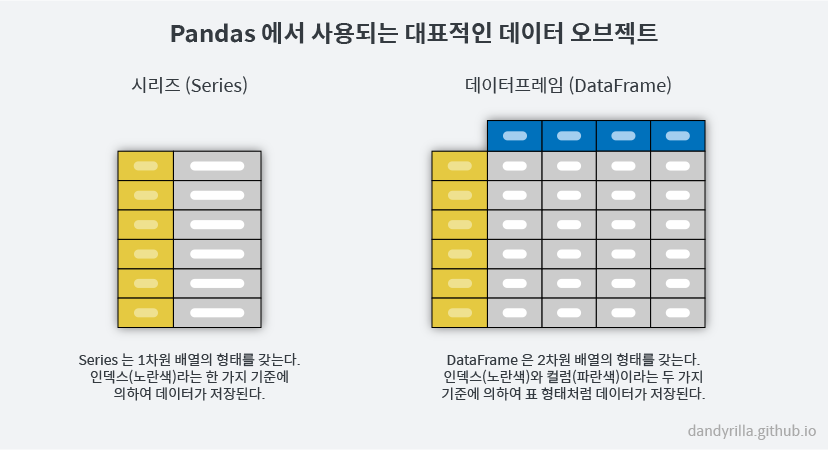
![]()
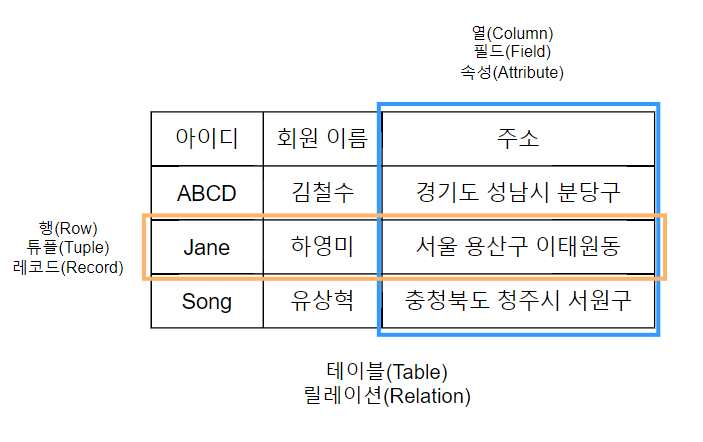
![]()
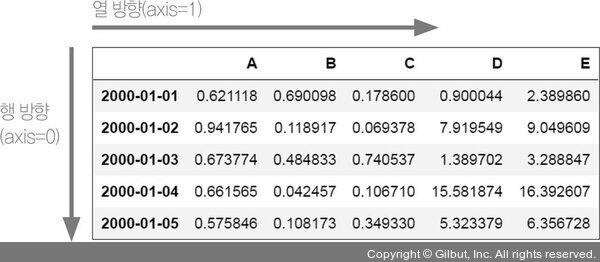
![]()
- 이해 안되면 보세요
-
헤이 판다스 데이터 요약해줘
1
2
3
4
temp = pd.DataFrame(data = equipment_data)

# temp.describe(include='all').T  # 뒤집어도 되는데 못생겨서 안뒤집겠음
temp.describe(include='all')
equipment_id equipment_name equipment_type location rated_capacity status count 5 5 5 5 5.000000 unique 5 5 3 3 NaN top INJ-001 사출기 1호기 사출기 A동 1라인 NaN freq 1 1 2 2 NaN mean NaN NaN NaN NaN 160.000000 std NaN NaN NaN NaN 41.833001 min NaN NaN NaN NaN 100.000000 25% NaN NaN NaN NaN 150.000000 50% NaN NaN NaN NaN 150.000000 75% NaN NaN NaN NaN 200.000000 max NaN NaN NaN NaN 200.000000 -
헤이 판다스 데이터 더 간단하게 요약해줘
1
2
3
4
5
6
7
8
9
10
11
12
13
14
15
16
17
18
19
temp = pd.DataFrame(data = equipment_data)

temp.info()  # 이건 뒤집는 거 아님

'''
<class 'pandas.DataFrame'>
RangeIndex: 5 entries, 0 to 4
Data columns (total 6 columns):
  #   Column          Non-Null Count  Dtype
---  ------          --------------  -----
  0   equipment_id    5 non-null      str
  1   equipment_name  5 non-null      str
  2   equipment_type  5 non-null      str
  3   location        5 non-null      str
  4   rated_capacity  5 non-null      int64
  5   status          5 non-null      str
dtypes: int64(1), str(5)
memory usage: 372.0 bytes
'''
-
데이터프레임은 인덱싱을 좀 다르게 해
- 그냥 인덱스 이름 쓰든가 → 보통 권장하지 않음
- loc으로 인덱스 이름 쓰든가
- iloc으로 숫자만 쓰든가
1
2
3
4
5
6
7
8
9
10
11
12
temp = pd.DataFrame(data = equipment_data, index=equipment_data['equipment_id']).drop(columns=['equipment_id'])

print(f'temp["equipment_type"]\n{temp["equipment_type"]}\n')  # 컬럼 직접 호출
print(f'temp.loc["INJ-001"]\n{temp.loc["INJ-001"]}\n')  # 행 인덱스 이름으로 호출
print(f'temp.iloc[0]\n{temp.iloc[0]}\n')  # 행 숫자 호출
print(f'temp.loc["INJ-001", "equipment_type"]\n{temp.loc["INJ-001", "equipment_type"]}\n')  # 행, 열 지정
print(f'temp.iloc[0, 0]\n{temp.iloc[0, 0]}\n')  # 행, 열 지정
print(f'temp.loc["INJ-001", :]\n{temp.loc["INJ-001", :]}\n')  # 행, 열 범위 지정
print(f'temp.iloc[:, 0]\n{temp.iloc[:, 0]}\n')  # 행, 열 범위 지정

# 출력 길어서 생략
# 그냥 뭐 필요해서 쓰다 보면 어떻게든 쓰게 됨 대충 보세요